What is BMI and Why Does It Matter?
BMI, or Body Mass Index, is one of those numbers that sounds more complicated than it actually is. At its core, it's just a ratio — your weight divided by the square of your height. That's it. Doctors and health professionals use it as a starting point to understand whether someone's weight might be putting their health at risk.
It won't tell you everything. A seasoned weightlifter and a sedentary person can share the same BMI, yet their health pictures look completely different. Still, for the average adult, BMI gives a quick, cost-free snapshot that's hard to argue with. That's why it's stuck around for decades — not because it's perfect, but because it's practical.
How the Numbers Actually Break Down
The World Health Organization puts adults into four main groups based on their BMI score. A reading below 18.5 is considered underweight, which can sometimes point to nutritional gaps or underlying conditions worth checking out. The sweet spot — the range most health guidelines aim for — sits between 18.5 and 24.9. Land here, and your statistical risk for weight-related illness is at its lowest.
Cross into the 25–29.9 range and you're in overweight territory. It's not an alarm bell on its own, but it does raise the odds of developing things like high blood pressure or type 2 diabetes over time. At 30 and above, the classification shifts to obesity, with sub-categories that reflect increasing levels of health risk. If you've ever wanted to quickly figure out your exact age in years, months, and days alongside health milestones, the Age Calculator pairs well with this tool for a fuller picture of where you stand.
BMI Isn't the Full Story
Here's something worth keeping in mind: BMI measures your mass relative to your height, but it has no way of knowing what that mass is actually made of. Bone density, muscle tissue, and fat all weigh the same on a scale, but they behave very differently inside the body. This is why athletes sometimes score in the "overweight" range despite being in excellent shape — and why two people with identical BMIs can have wildly different body compositions.
Pregnant women, older adults, and people from certain ethnic backgrounds may also get readings that don't quite reflect their real health status. Think of BMI as one data point in a broader conversation, not the final word. A proper health assessment from a qualified professional will always fill in the gaps that a number alone can't.
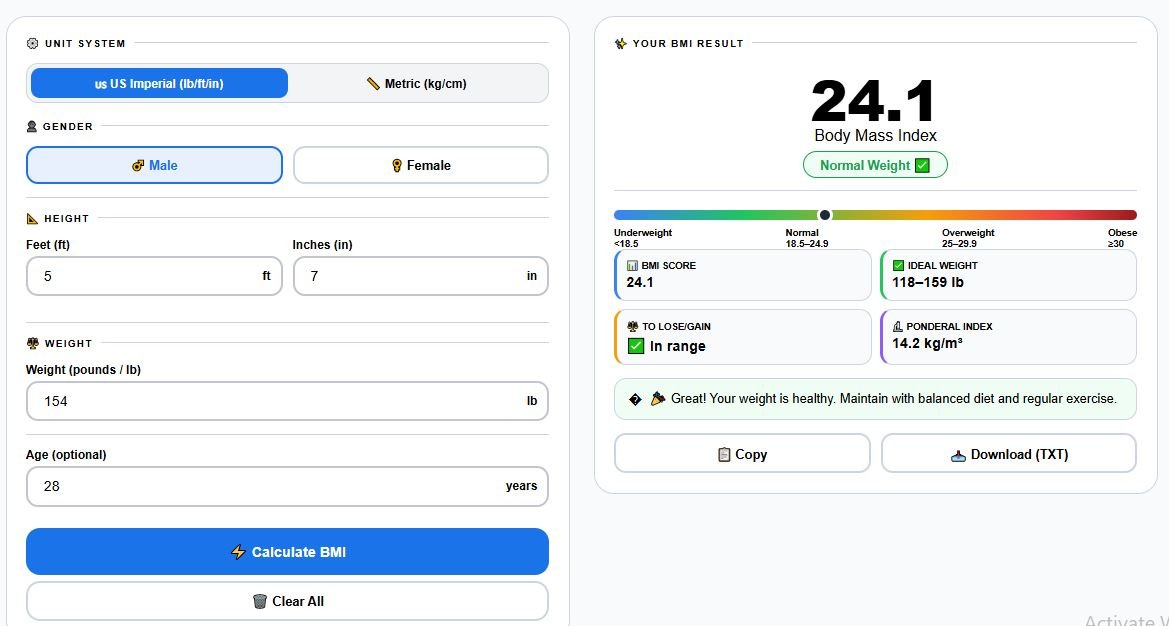
BMI gives you a number, not a verdict. Most people check it once, feel vaguely guilty, and close the tab — but the ones who actually do something with it treat it as a starting point, not a finish line. If you're also trying to stay on top of your academic performance while juggling a healthier lifestyle, our Grade Calculator is worth bookmarking too. Small wins across the board add up faster than you'd think.